









A Chinese scientist is working on research that could change everything women know about fertility, menopause and the biological clock. The idea sounds almost unbelievable — but the science behind it is very real.
GossipShop breaks it down in plain language.
Who Is Behind This Research?
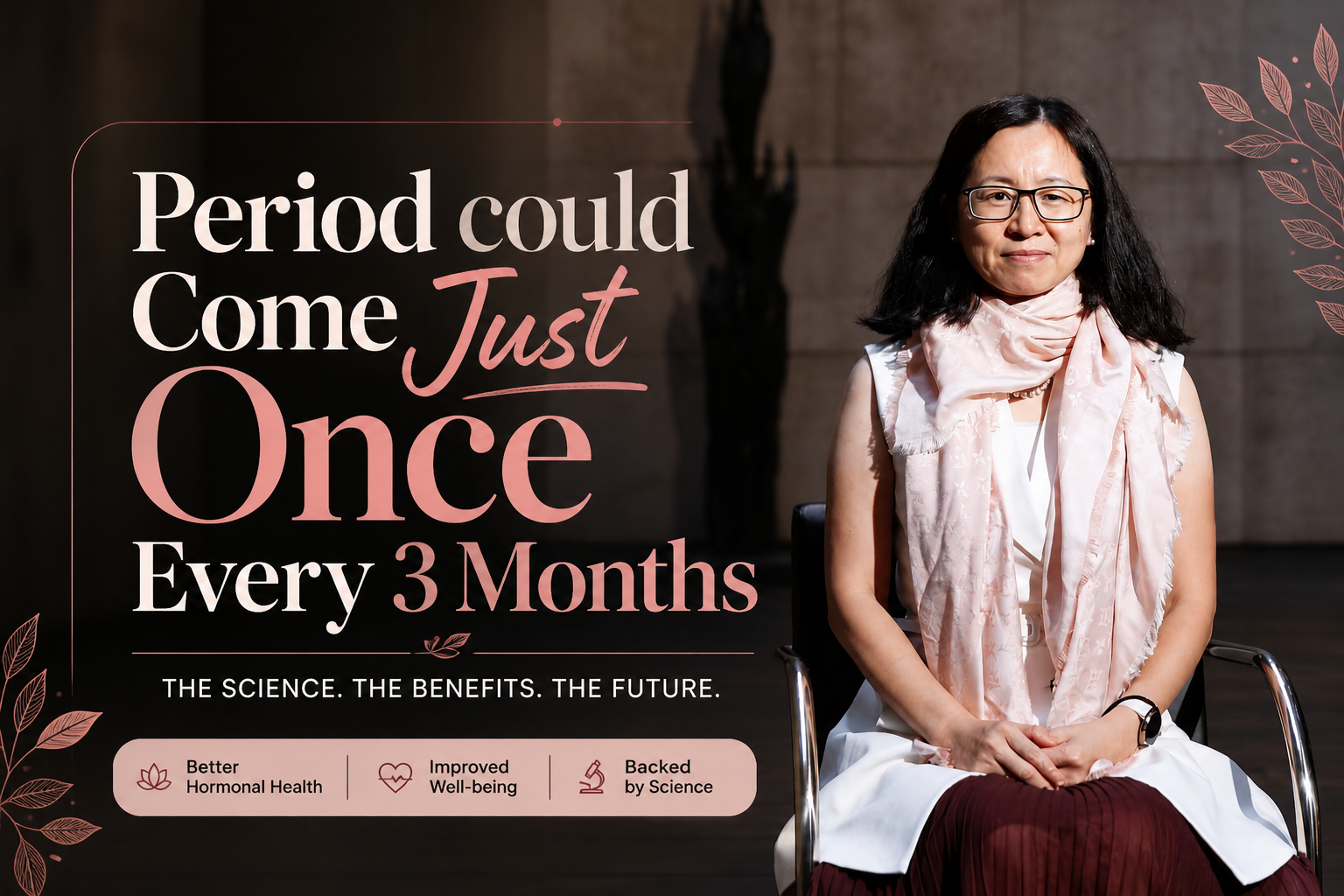
A Chinese biologist named Hongmei Wang works at the State Key Laboratory of Stem Cell and Reproductive Biology in Beijing. Her research focuses on extending women’s fertility lifespan — not with fancy technology, but with gritty, determined science. Esteri
Wang’s work is driven by a very real crisis. China’s population is declining rapidly. The government needs women to have more children. But biology has its own timeline — and that timeline has been shortening for modern women who delay marriage and motherhood for careers and education.
Wang is trying to change that timeline.
The Big Idea — Periods Once Every Three Months
One of the most striking ideas coming from Wang’s research is the possibility of slowing down ovulation. Here is how it works in simple terms.
Women are born with a fixed number of eggs. Every menstrual cycle uses up one or more of those eggs. The faster the cycles happen, the faster the egg reserve depletes. When the eggs run out — menopause begins and fertility ends.
Wang’s research explores whether ovulation can be pushed back — potentially reducing a woman’s menstrual cycle to once every three months instead of every month. Her mouse studies suggest it may be possible to save more eggs by stopping ovulation temporarily. Esteri
Fewer cycles means slower egg depletion. Slower egg depletion means a longer fertility window. In theory — women could remain fertile significantly longer than nature currently allows.
What About Menopause?
Wang is also investigating whether menopause itself can be delayed. Women typically experience significant fertility decline around age 37, enter perimenopause around 46 and reach full menopause at approximately 48.6 years old. Meanwhile life expectancy has climbed steadily — meaning women now spend more than one-third of their lives after menopause. Germany Visa
That gap between the end of fertility and the end of life is growing. Wang’s research aims to close it — or at least narrow it — by preserving ovarian function longer.
The Honest Risks
Wang does not oversell her research. She acknowledges the risks directly.
Stopping or slowing ovulation is not a simple intervention. The hormonal systems involved in the menstrual cycle affect far more than just fertility. They influence bone density, cardiovascular health, brain function and emotional wellbeing.
Interfering with those systems — even to preserve eggs — carries potential consequences that are not yet fully understood. Wang’s mouse studies show promise but human biology is far more complex.
More research, more trials and more time are needed before anything like this becomes available to real women.
Why This Matters for Nigerian and African Women
This research has deep relevance for Nigerian and African women specifically. Here is why:
Late marriage is increasingly common. Many Nigerian women — especially professionals and those in the diaspora — are marrying later. By the time they are ready to start families, fertility has already begun declining.
Career and motherhood pressure. Nigerian women in Europe and globally face intense pressure to balance career progression with family building. Research that extends the fertility window would give women more time and more choices.
Fertility treatment costs. IVF and other fertility treatments are expensive and emotionally exhausting. If women can naturally preserve fertility longer, the need for expensive interventions reduces.
Cultural expectations. In Nigerian culture, having children remains a central life expectation. Research that extends fertility could ease the intense social pressure many women face around childbearing age.
When Could This Be Available?
Not soon — and Wang is clear about that.
This research is still at the animal study stage. The path from mouse studies to human clinical trials is long. Regulatory approvals, safety studies and ethical reviews all take years.
Realistically, any treatment based on Wang’s research is likely a decade or more away from reaching ordinary women. However the direction of the science is clear and the momentum is growing.
GossipShop Verdict
Hongmei Wang’s research represents a genuine scientific frontier — not science fiction. The idea that women could one day choose to slow their biological clock, delay menopause and extend their fertility window is moving from impossible to merely distant.
For Nigerian women navigating the competing demands of career, diaspora life and cultural expectations around motherhood — this research matters. Watch this space. 🔬👩🏾🔬