









Nissan just made a bold and controversial move on the African continent — and it’s got people talking. The Japanese car giant is pouring $45 million into Egypt to expand production, while simultaneously walking away from South Africa after nearly 60 years. Yes, you read that right. One country gains, one country loses — and Africa is watching.
The Egypt Play — $45 Million and a New Factory Line
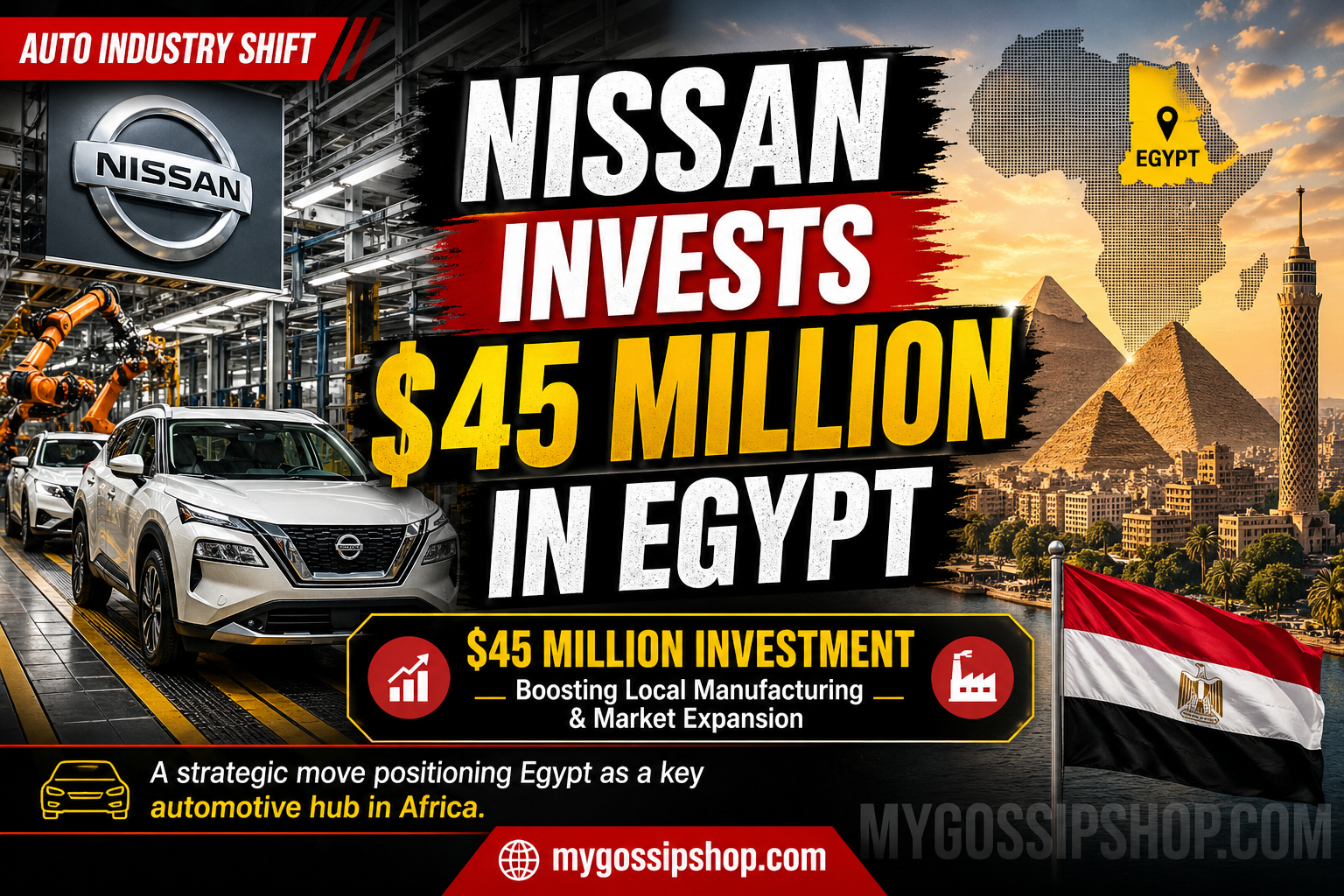
Nissan is set to invest $45 million in expanding its vehicle production operations in Egypt in 2026, with plans to lift local output by about one-third and increase exports to markets across Africa.
That means a new production line will see the Japanese automaker deliver at least 10,000 extra cars annually, with more than half of the components being made domestically.
Think about that. More cars. More local parts. More jobs in Egypt. Nissan’s current factory in western Cairo already manufactures roughly 30,000 vehicles annually — so this expansion takes them to around 40,000 units per year.
And this isn’t a new relationship either. Having already invested $276 million in the country, Nissan now sees Egypt not just as a consumer market, but as a regional base for expansion across Africa.
The South Africa Bombshell
Here’s where things get spicy. While Nissan is building up in Egypt, it is simultaneously exiting nearly 60 years of vehicle manufacturing in South Africa, having agreed to sell its historic Rosslyn plant near Pretoria to Chinese automaker Chery.
Six decades. Gone. And who moves in? China’s Chery. If that doesn’t tell you everything about the shifting power dynamics on the African continent right now, nothing will.
For South Africa, the withdrawal of manufacturing capacity represents a loss of industrial value addition, with potential knock-on effects across employment, supplier networks, and export earnings.
Why Egypt and Not South Africa?
Simple — money and geography. According to Nissan Africa leadership, Egypt offers a combination of lower operating costs, geographic advantage, and access to multiple markets, making it a more efficient base for long-term expansion.
Egypt sits at the crossroads of Africa, the Middle East, and Europe. Ships go everywhere from there. And Nissan is positioning itself to benefit from the gradual removal of tariff barriers under the African Continental Free Trade Area (AfCFTA).
In short — Egypt is cheap to operate in, strategically located, and sitting on a goldmine of trade opportunities. Nissan did the math.
Nissan Is Struggling Globally — But Betting Big on Africa
Let’s keep it real. Nissan isn’t doing this because everything is rosy. The company projects a net loss of approximately $4.2 billion for the fiscal year ending March 2026, and its global restructuring plan will eliminate 20,000 jobs and shutter seven factories worldwide.
So while they’re cutting everywhere else — closing plants in Japan and Mexico, selling their headquarters building — Egypt is one of the few places they’re actually spending money. That says a lot about how much Nissan believes in Africa’s future.
What This Means for Nigeria and West Africa
Now here’s the question on every Nigerian’s mind — what does this mean for us?
Directly? Not much immediately. But indirectly, this is a sign that the African automotive market is heating up. Global manufacturers are scrambling to set up production hubs on the continent. Egypt is winning today. Nigeria, with its massive population and buying power, could be next if the government plays its cards right.
The AfCFTA is supposed to make trade across African borders easier and cheaper. If that happens, cars rolling out of Egypt could flood West African markets — including Nigeria — at competitive prices. That’s either an opportunity or a threat for local car assembly businesses, depending on how you look at it.
The Bigger Picture
Between Nissan moving in, Volkswagen expanding, and China’s Chery taking over South Africa’s old plants, one thing is crystal clear — Africa is the next big automotive battleground. The continent’s growing middle class, young population, and improving infrastructure are making global car makers sit up and pay attention.
The only question is — will Africans be passengers in this story, or will we be in the driver’s seat?
Stay on top of the latest African business news, gist, and analysis — only on MyGossipShop.com