




Nigerian doctors, this one is for you. After months of anxiety, confusion, and some people literally being placed on administrative leave, the United States has done a quiet U-turn — and the news is very, very good.
What Actually Happened?
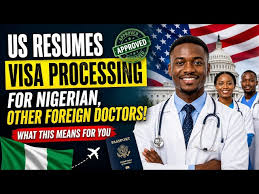
The United States resumed visa processing for Nigerian and other foreign-trained doctors after quietly reversing a recent policy that had disrupted immigration applications for medical professionals.
“Quietly” is doing a lot of work in that sentence. There was no big announcement, no press conference — America just changed course behind the scenes and hoped nobody would make it a big deal. Well, we’re making it a big deal, because Nigerian doctors deserve to know!
The policy shift comes as welcome news for thousands of foreign physicians who were affected by an earlier visa processing freeze introduced under the U.S. travel restriction framework.
What Was the Original Problem?
Let’s rewind. Earlier this year, things got very messy very fast. The previous policy, introduced in January, had paused decisions on visa extensions, work permits, and green card applications for citizens from approximately 39 countries.
Thirty-nine countries. Nigeria was on that list. And the people caught in the middle? Hardworking, highly skilled doctors who had already built careers and lives in America.
As a result of the suspension, several physicians were reportedly placed on administrative leave, while others faced the possibility of losing their jobs due to visa delays and stalled documentation.
Imagine training for years, passing all the exams, building your medical career in America, and then one policy decision puts your entire livelihood on hold. The stress these doctors went through is unimaginable.
So What Changed?
The United States had a reality check — and the numbers didn’t lie. The U.S. Citizenship and Immigration Services updated its immigration guidelines to exempt medical doctors from the restrictions, meaning applications tied to physicians can once again move forward through the processing system.
A spokesperson for the Department of Homeland Security also confirmed the reversal, stating that immigration applications associated with medical physicians will continue to be processed.
America Needs Foreign Doctors — Period
Here’s the real talk behind the policy reversal. America cannot afford to lose its foreign doctors, and the numbers make that crystal clear.
The United States is currently facing a significant shortage of medical professionals, with estimates suggesting a deficit of around 65,000 doctors nationwide. Sixty-five thousand! That is not a gap you can fill by blocking visa applications.
Industry projections indicate that the gap could widen further in the coming years as demand for healthcare services rises and physician retirements increase.
And here’s the part that should make every Nigerian doctor proud: foreign-trained doctors account for roughly a quarter of the U.S. medical workforce and are particularly important in underserved communities, where many work in primary care and other essential medical services.
One in four doctors keeping American healthcare running. That’s the Nigerian doctor. That’s the African doctor. That’s the international medical professional doing the work in communities that would otherwise have no healthcare access at all.
What This Means for Nigerian Doctors Right Now
For Nigerian doctors and other international physicians, the resumed processing offers renewed stability and a path forward after months of uncertainty.
If your visa application, green card, or work permit was stuck in the system — it should now be moving again. Hospitals and clinics affected by staffing shortages are also expected to benefit from the policy adjustment, as delayed physicians can now continue or resume their employment processes.
The Bigger Lesson Here
The quiet reversal highlights the balancing act between immigration policy and workforce realities in critical sectors such as healthcare.
Translation? You can make bold immigration policies all you want — but when the hospital system starts creaking and 65,000 doctor positions sit empty, reality always wins. Nigerian doctors didn’t just survive this policy freeze; they proved, once again, that they are indispensable.
As the U.S. continues to grapple with healthcare staffing challenges, foreign-trained doctors are likely to remain an essential part of the country’s long-term medical workforce strategy.
To every Nigerian doctor who held their breath through this — exhale. The door is open again. 🇳🇬💪