








After decades of promises, failed rehabilitation contracts and billions of naira wasted, Nigeria’s state oil company has taken a bold new step — this time with Chinese partners who will only get paid if the refineries actually work.
GossipShop breaks down what happened, what it means and whether Nigerians should believe it this time.
What Happened
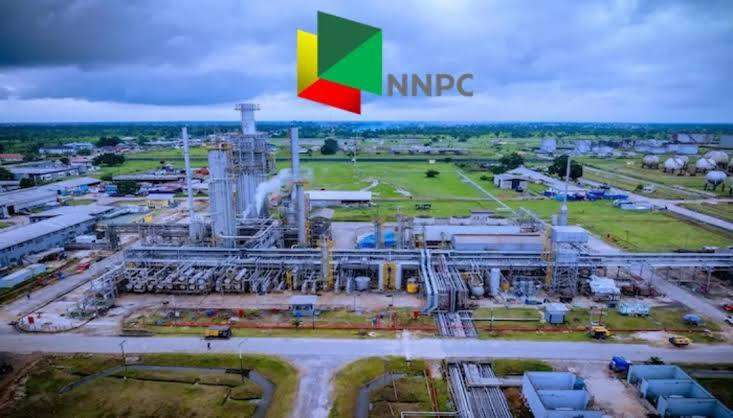
The Nigerian National Petroleum Company Limited (NNPCL) has signed a Memorandum of Understanding (MoU) with two Chinese companies — Sanjiang Chemical Company Limited and Xingcheng (Fuzhou) Industrial Park Operation and Management Co. Ltd — to support the restart, full operation and possible expansion of the Port Harcourt and Warri refineries.
The agreement was signed on April 30, 2026 during a meeting held in Jiaxing City, China, by NNPCL Group Chief Executive Officer Bashir Bayo Ojulari, alongside the Chairmen of both Chinese firms.
Who Are These Chinese Companies?
Sanjiang Chemical Company Limited is a major Chinese chemical and petrochemical firm with decades of experience in industrial plant management, refinery operations and chemical production across Asia and Africa.
Xingcheng (Fuzhou) Industrial Park Operation and Management Co. Ltd specialises in managing large-scale industrial and energy hubs — exactly the kind of expertise needed to transform Port Harcourt and Warri into fully functional refining centres.
These are not small or unknown companies. NNPCL says these discussions went on for over six months before this MoU was signed — suggesting this is more serious than previous one-off rehabilitation contracts.
What Makes This Deal Different
This is the most important question every Nigerian is asking — and rightly so. We have heard refinery revival promises before.
Here is what is genuinely different this time:
Performance-based partnership model Unlike previous rehabilitation contracts where companies were paid whether the refineries worked or not, this new arrangement is structured as a technical equity partnership. The Chinese firms will bring engineering expertise, operational management and investment — and their financial returns will be directly tied to refinery performance.
In simple terms — if the refineries don’t work, the Chinese partners don’t fully get paid. That is a completely different incentive structure from anything Nigeria has tried before.
Beyond rehabilitation — full operation and expansion Previous efforts focused only on repairs. This agreement covers the complete restart, day-to-day operation, long-term maintenance AND potential expansion of both refineries. NNPCL is no longer looking for a contractor to fix things and leave — they want a partner to run the refineries properly.
Petrochemical and industrial hubs The deal also opens the door to developing co-located petrochemical and gas-based industrial hubs around both refinery complexes. This means Port Harcourt and Warri could eventually produce not just fuel — but fertilizers, petrochemicals, cleaner fuels and other higher-value petroleum products. This is transformational if it happens.
Why Has Nigeria Struggled With Its Refineries?
For those who need background — Nigeria has four refineries:
- Port Harcourt Refinery 1 and 2
- Warri Refinery
- Kaduna Refinery
Combined they have a capacity to refine over 400,000 barrels of crude oil per day. For most of the last two decades they have operated at well below 10% capacity — or not at all.
Nigeria — Africa’s largest oil producer — has been importing virtually all of its refined petroleum products, spending billions of dollars in foreign exchange on fuel that could and should be produced at home.
Every time fuel prices go up in Nigeria — and they have gone up dramatically in recent years — it is partly because of this absurdity. A country swimming in crude oil, queuing for imported petrol.
The reasons for refinery failures have been multiple: corruption in rehabilitation contracts, poor management, lack of technical expertise, vandalism and sabotage of pipelines, and a persistent culture of paying for work that was never properly done.
What Ojulari Said
NNPCL CEO Bashir Bayo Ojulari has been clear about his strategy since taking office. At the Nigeria International Energy Summit 2026 earlier this year, he stressed that Nigeria’s refinery problems are not just financial — they are deeply technical and operational.
He said NNPCL is no longer interested in funding rehabilitation projects without guaranteed results. Instead, the company wants technical partners willing to operate, optimise and help guarantee refinery performance over the long term.
This MoU with the Chinese firms is the first major public result of that strategy.
What This Could Mean for Ordinary Nigerians
If this deal is successfully implemented — and that is still a big if — here is what Nigerians could eventually see:
- 📉 Lower fuel prices — domestic refining reduces dependence on expensive imports
- 💵 Foreign exchange savings — Nigeria spends billions importing refined products that it could produce locally
- 🏭 Jobs — functional refineries and petrochemical hubs create thousands of direct and indirect jobs in Port Harcourt and Warri
- ⚡ Energy security — reliable domestic fuel supply reduces the impact of global oil price shocks on Nigerian pump prices
- 🌍 Export potential — if expanded properly, Nigeria could eventually export refined products to neighbouring countries
Should Nigerians Believe It This Time?
Honestly, cautious optimism is the right position.
The performance-based equity model is genuinely new and different. Six months of technical discussions before signing suggests serious intent. And the involvement of experienced Chinese industrial partners — not just construction contractors — gives this more credibility than previous attempts.
However, Nigerians have seen too many refinery promises collapse under the weight of corruption, mismanagement and political interference. The real test will not be the signing ceremony in Jiaxing — it will be whether crude oil is actually being refined in Port Harcourt and Warri by 2027 or 2028.
GossipShop will be watching — and reporting.
GossipShop Verdict
This is the most credible refinery revival deal Nigeria has attempted in years. The performance-based partnership model, the calibre of the Chinese partners, and the six months of serious negotiations before signing all point to something more serious than the usual noise.
But Nigeria’s refineries have defeated every promise before. The proof will be in the petrol pump — not the MoU.